

Mike | The Lab
Published on
How to always trade well: The foundation nobody talks about
Consistent trading is not about the best strategy or the fastest execution. It starts with mindset, goals, and discipline. Here is the foundation every trader needs first.
Before the strategy, there is the foundation
When most traders want to improve, they go straight for the technical stuff. Better entries. Tighter stops. A new indicator. Those things matter eventually. But there is a reason the best traders in the world do not just talk about setups. They talk about process. They talk about mentality. They talk about the work they do before they ever place a trade.
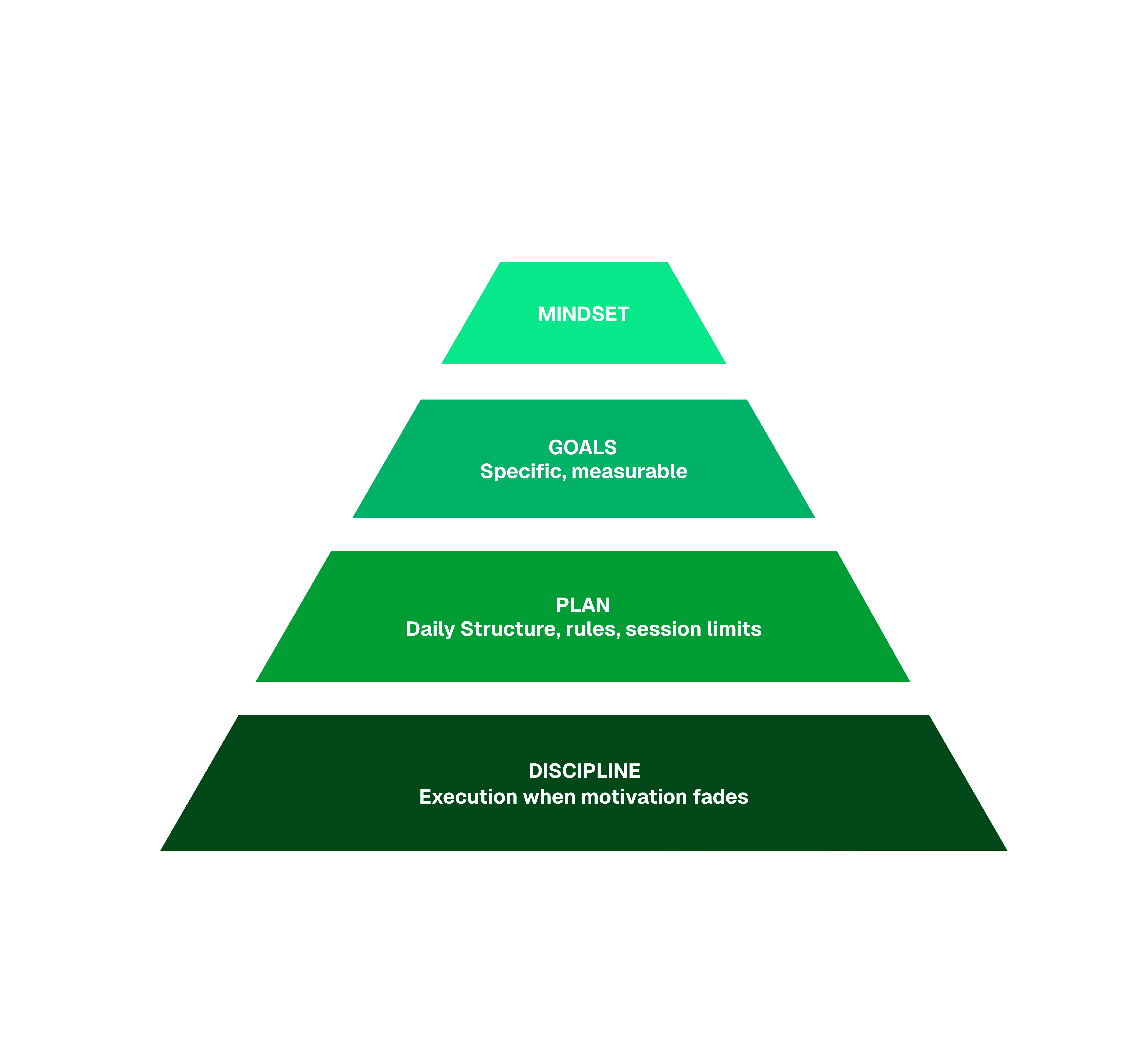
This article is about that layer. The foundation. Mindset, goals, plans, discipline, and emotion control, in that order. Get these right and every technical skill you build on top compounds faster and sticks longer. Skip them and even a great strategy falls apart under pressure.
"Consistent trading performance is less about how good your strategy is and more about how strong your foundation is. The stronger the foundation, the easier everything else becomes.”
Why mindset comes before everything else
A lot of traders ask: should I not learn risk management first? Should I understand market structure before worrying about mindset? You can learn those things in any order, but without the right mindset underpinning all of it, none of it will hold.
Markets are constantly changing. Volatility regimes shift. Setups that worked in one environment stop working in another. Prop firm rules evolve. Your own life circumstances fluctuate. If your consistency is built entirely on a technical edge, the moment that edge gets challenged, you have nothing to fall back on.
Mindset is the thing that stays constant when everything else is in flux. It keeps you executing your plan on a drawdown day. It stops you from blowing your daily loss limit out of frustration. It separates traders who wash out from traders who adapt and survive.
Your mindset, simply put, is this: I am here to improve. I will put in the work every session. I will not let short-term results dictate long-term behavior. That is the whole thing. But building that mindset consistently requires the next three pieces.
Set a goal that means something to you
Vague intentions do not produce specific results. “I want to be a better trader” isn’t a goal. “I want to pass a funded evaluation with a $50.000 account by the end of Q2” is a goal.
The difference is that the second one tells you exactly what to build a plan around.
When you are tempted to take a low quality setup, when you are up on the day and feeling reckless, the goal reminds you why protecting gains matters more than chasing more.
It also clarifies what kind of trader you need to be right now. If your goal is to pass a prop firm evaluation, your plan looks completely different than if your goal is to grow a personal account slowly over two years. Same market, same instrument, totally different approach, risk parameters, and daily structure.
The goal determines the plan. Without the goal, there is no plan worth following.
Build a plan that turns the goal into daily actions
Once the goal is clear, the plan is where it gets real. A plan answers one question: what do I do every day to move toward that goal? For a trader aiming to pass a funded evaluation, a realistic plan might look like this: trade a maximum of two setups per session, only during the first two hours of the New York open, with a hard daily stop at 1% drawdown. Review every trade in a journal after the session closes. Spend 20 minutes on the weekend reviewing the week's charts to identify recurring mistakes. That is a plan. It is specific. It is actionable. It does not require motivation to execute, it just requires showing up and following the steps.
Discipline is what carries you when motivation runs out
Here is something every trader eventually learns: motivation is unreliable. The first week of a new plan feels electric. You are logging every trade, reviewing your journal, sticking to your rules. By week three, the novelty is gone. You have had a few losing days. The markets have been choppy and frustrating. The plan starts to feel like a cage rather than a guide.
This is exactly when discipline makes the difference. Motivation gets you started. Discipline keeps you going when the feeling is gone.
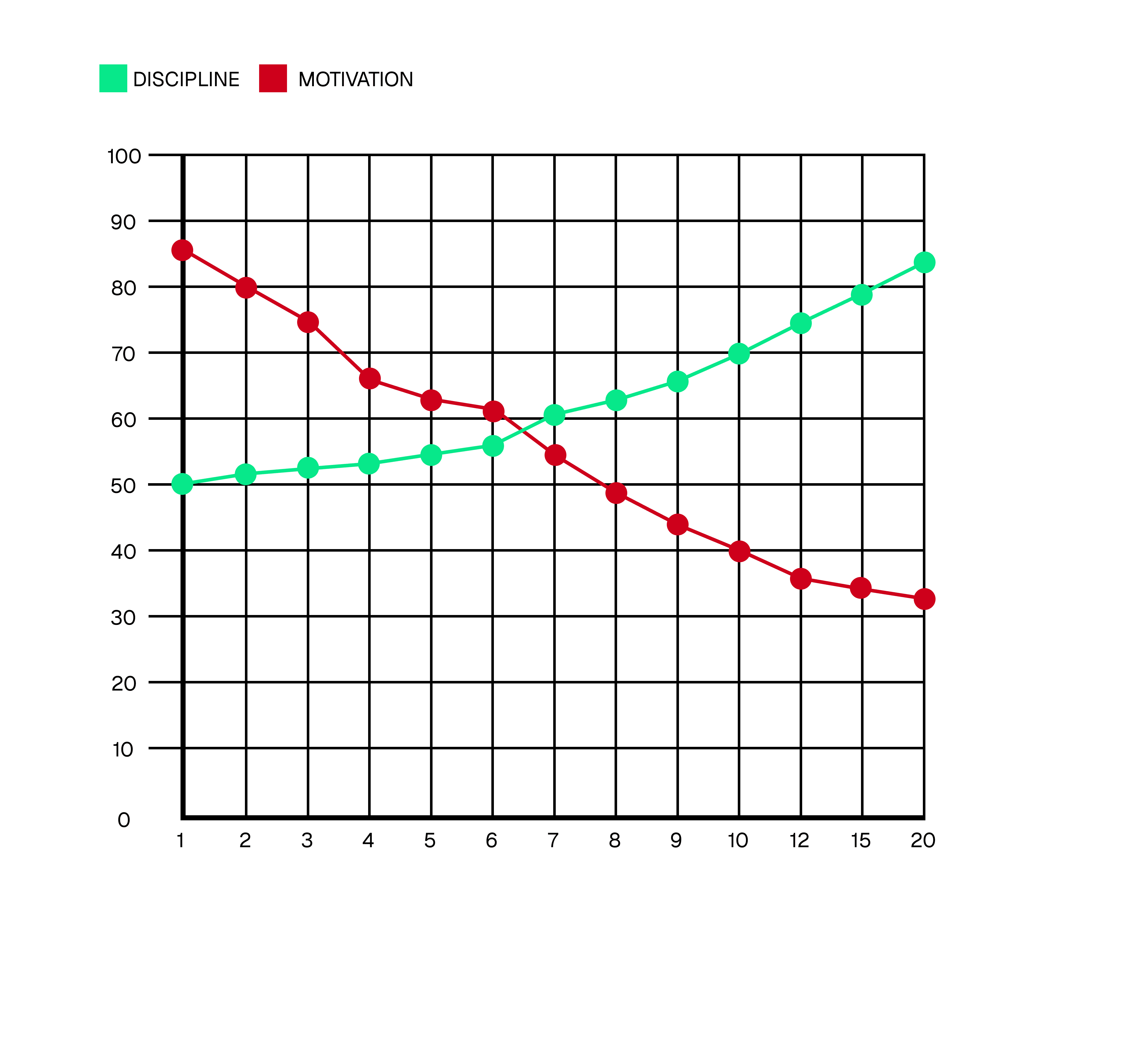
Discipline in trading looks like this: you hit your daily loss limit and you close the platform, even though there are still hours left in the session. You skip a setup because it does not meet your criteria, even though it looks pretty good. You do your post-session review even on a day where you do not want to look at the P&L. None of those moments feel heroic. They are quiet, boring, and repetitive. But they are what consistency is actually made of.
Emotion control: the last line of defense
Discipline and emotion management are two sidfes of the same coin. You can have the ebst plan in the world and emotion will still try to override it. The most common emotion threats in trading are:
• Revenge Trading: Losing a trade and immediately re-entering to get the money back, usually without a valid setup. The loss triggers urgency and it bypasses the checklist. The following trade is emotional, not analytical.
• Euphoria: A few good days in a row creates a dangerous sense of invincibility. Rules get bent. Trade size up. The good run ends and you give it all back.
• Tilt: A bad fill. Volatile day. Frustrating loss. Happen every day. If your emotional state is tied to every one of them, your decision making is compromised.
The antidote is the same: a goal and plan in place. If the emotion rises you will redirect your attention to the structure you have built.
What does my plan say to do here? Whatever the answer, do that.
You can’t trade perfectly. You can trade consistently.
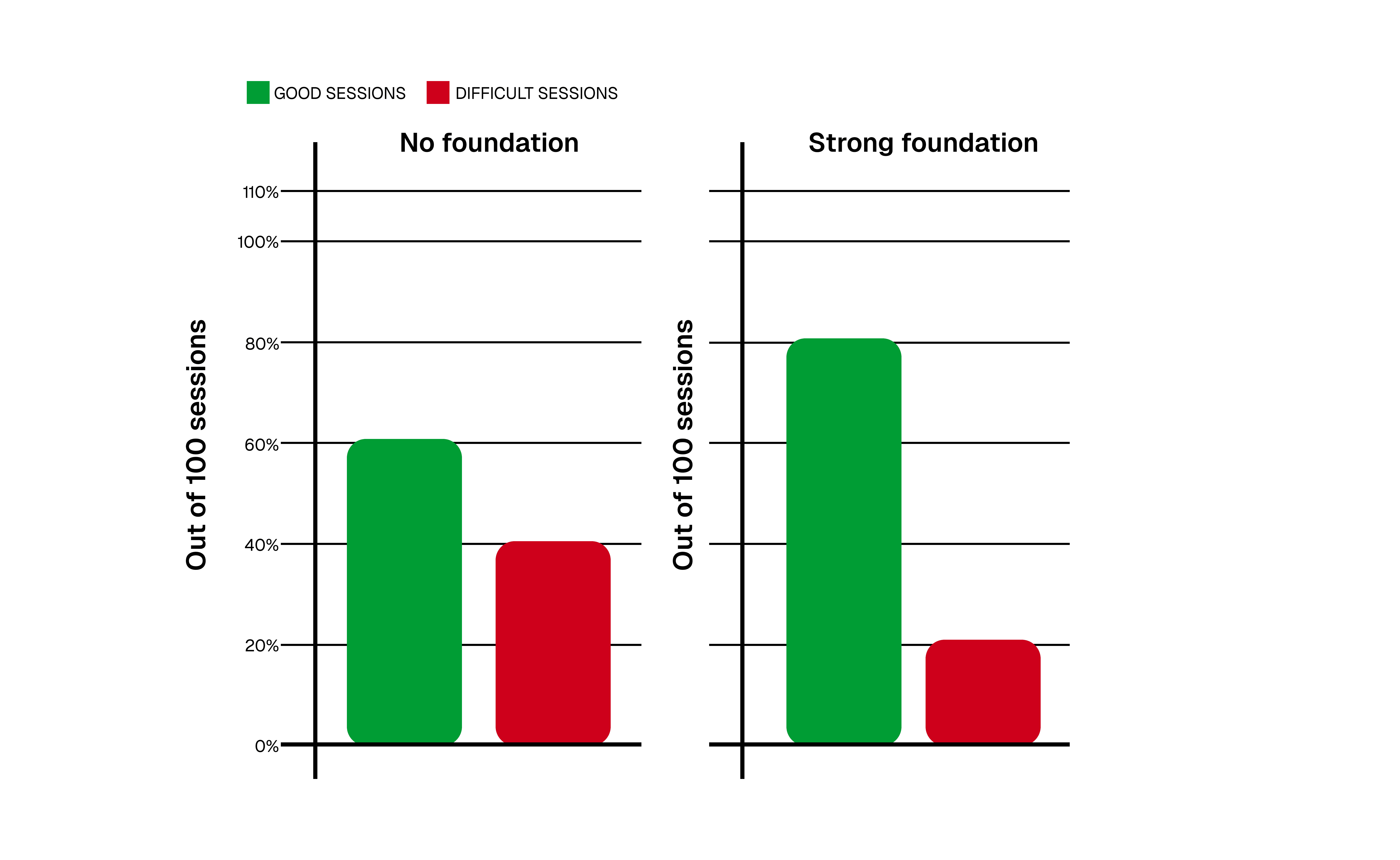
One of the most important reframes in trading is this: the goal is not to have perfect sessions. It is to increase the percentage of good sessions over time.
Think of it as a distribution. Out of 100 sessions, maybe 60 are good and 40 are difficult right now. That is where you start. By working on your foundation, your mindset, your goal clarity, your plan, your discipline, you shift that distribution. 60 becomes 65. Then 70. Then 80. The bad sessions do not disappear, but they shrink in frequency and in impact.
Even professional funded traders have losing days. Even top-performing accounts go through drawdown periods. The difference between those traders and the ones who wash out is not that they never struggle. It is that their foundation is strong enough to keep them executing through the struggle without making it worse.
You can have a losing morning and still finish the session having protected your daily limit, stuck to your plan, and not revenge traded. That is a good session. Not every good session shows up green on the P&L but every one of them builds the trader you are becoming.
The takeaway: Build the base first
Most trading content goes straight to the exciting stuff entries, indicators, patterns, setups. And that content has its place. But if you skip the foundation, all of it sits on sand.
Get clear on your mindset. Set a goal that's specific enough to build a plan around. Build the plan. Follow it with discipline even when motivation fades. And manage your emotions not by eliminating them, but by having a structure strong enough that they can't override your process.
Everything else, execution, risk management, strategy refinement becomes dramatically easier once that base is solid. Start there. Build up from there. The performance follows.