

Mike | The Lab
Published on
A trading journal isn't optional if you're serious about consistent profits. It's what separates systematic traders from gamblers hoping for lucky streaks. Without one, you're repeating mistakes, missing patterns, and leaving edge on the table.
Most traders skip journaling because it feels tedious. That's exactly why 90% of retail traders fail. The ones who succeed? They document every trade, every decision, every emotional trigger. They treat their journal as a laboratory where data reveals what actually works.
Here's how professional traders use journals to identify patterns, manage psychology, and systematically improve their win rates.
What Is a Trading Journal?
A trading journal is a comprehensive record of every trade you execute, including entry and exit points, position size, timeframe, strategy used, and the reasoning behind each decision. It also captures your psychological state, market conditions, and post-trade analysis.
Think of it as your trading database. Every entry becomes a data point. Over time, these data points reveal patterns that predict future performance. Without this record, you're relying on memory and gut feeling, both unreliable when capital is at risk.
Why Keeping a Trading Journal Matters
Consistency separates profitable traders from breakeven ones. A journal enforces accountability. When you know you'll document each trade, you're less likely to deviate from your plan or take impulsive positions.
The data doesn't lie. Reviewing 100 trades instead of just remembering last week's winners reveals the real story. Your actual win rate, average risk-reward ratio, and which setups consistently deliver. This data-driven approach eliminates bias and builds a framework for repeatable results.
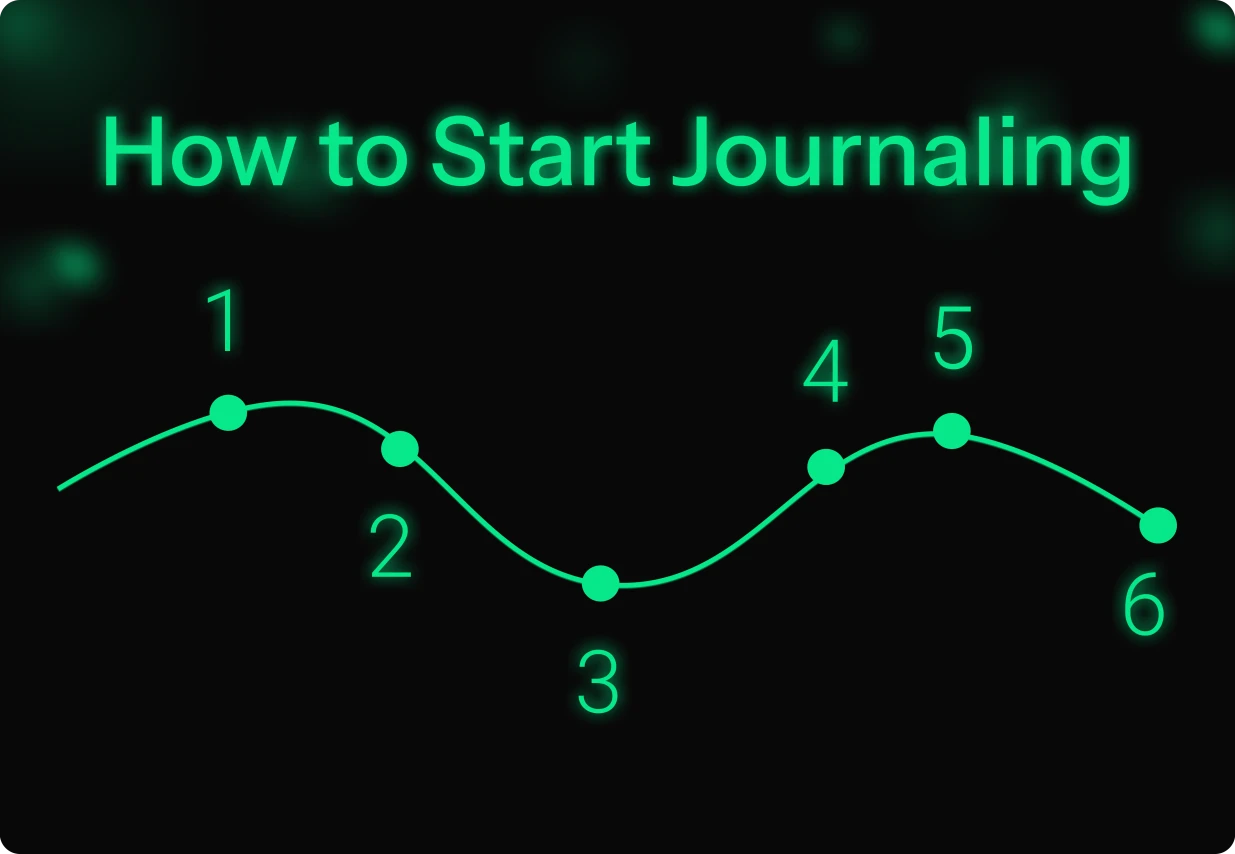
6 Ways Professional Traders Use Journals to Maximize Profits
Pattern Recognition: Journaling exposes recurring behaviors, both productive and destructive. When the same issue appears across multiple trades, your journal flags it immediately. Take position sizing errors. Many traders discover they consistently overtrade on specific days or after certain market conditions. One trader noticed Mondays were always unprofitable. After reviewing journal entries, the pattern was clear: oversized positions after weekend breaks led to increased risk and emotional decisions. The fix was straightforward. Reduce position size on Mondays until discipline returns. Without the journal, this
pattern would have continued draining the account. The same applies to winning strategies. Review your profitable trades and look for commonalities. Time of day, market conditions, specific technical setups, all become visible when documented. Small advantages compound when you can replicate the conditions that led to your best performances.Emotional Management: Fear during drawdowns, greed during winning streaks. When emotions spike, logic disappears. A journal creates distance between your feelings and your decisions. Writing forces you to slow down. Instead of jumping into the next trade, you document what just happened. This pause creates space for rational analysis. You're not just reacting, you're reviewing. Document your emotional state for each trade. Anxious, confident, frustrated, these feelings drive behavior. When you exit a position early out of panic, write it down. When you hold too long because you're attached to being right, document that too. Over time, you'll identify your emotional triggers. Maybe you always exit early when you hit a specific profit target. Or you hold losers too long hoping for reversals. These patterns only become visible through consistent tracking. Understanding your triggers lets you prepare for them. If you know two consecutive losses make you reckless, implement a rule: no trades after two reds until you've reviewed your plan. Structure removes emotion from the equation.
Discipline Enforcement: Success comes from executing your plan, not from finding perfect setups. A journal keeps you honest about whether you're actually following your rules. Did you honor your predetermined stop loss? Did you size the position according to your risk management framework? Did you wait for your complete setup criteria before entering? Your journal answers these questions with facts, not rationalizations. The act of recording creates accountability. Even though no one else reviews your journal, there's psychological weight in documenting a deviation. You can't deceive the data. Either you followed your process or you didn't. This accountability builds discipline over time. Each logged trade that followed the plan reinforces productive habits. Each logged deviation serves as a warning that you're drifting. The journal becomes your trading coach, constantly reminding you of your commitment to process over outcome.
Strategy Validation: Which strategies actually generate profits? Most traders guess. Journaling traders know. By tagging each trade with the specific strategy used, you can analyze performance across your entire playbook. Your "low of day reversal" setup might feel profitable, but the data could reveal a different story. With this information, you make informed decisions. Eliminate strategies with negative expectancy. Double down on strategies that consistently deliver. Refine setups that show promise but need adjustment. This is where journaling software adds value. Instead of manually calculating win rates and profit factors, platforms automatically generate these metrics. The key is honesty. Every trade gets logged, winners and losers. Cherry-picking which trades to record destroys data integrity. You need the complete picture to draw valid statistical conclusions about your edge.
Position Sizing Optimization: Position sizing directly impacts performance, but most traders don't realize their optimal risk level until they analyze journal. Some traders perform better when risking $500 per trade but struggle at $2,000. The increased dollar risk creates psychological pressure that affects decision-making. They exit winners early, hold losers too long, or avoid taking valid setups entirely. Your journal reveals your sweet spot. This isn't about theoretical risk tolerance, it's about actual performance under real trading pressure. Once you identify this threshold, structure your trading around it. Stay within your comfort zone until your account grows or your psychology strengthens. Forcing yourself to trade beyond your current capacity doesn't build character, it destroys capital.
Progress Tracking: Trading improvement happens gradually. Without documentation, you can't distinguish between actual skill development and random variance. A journal creates a timeline of your evolution. Compare your first 100 trades to your most recent 100. Are you following your plan more consistently? Is your average risk-reward ratio improving? Are you eliminating your most common mistakes?